
The State of Connection in Pleasanton
Full report coming soon
First, why does connection matter? The national context
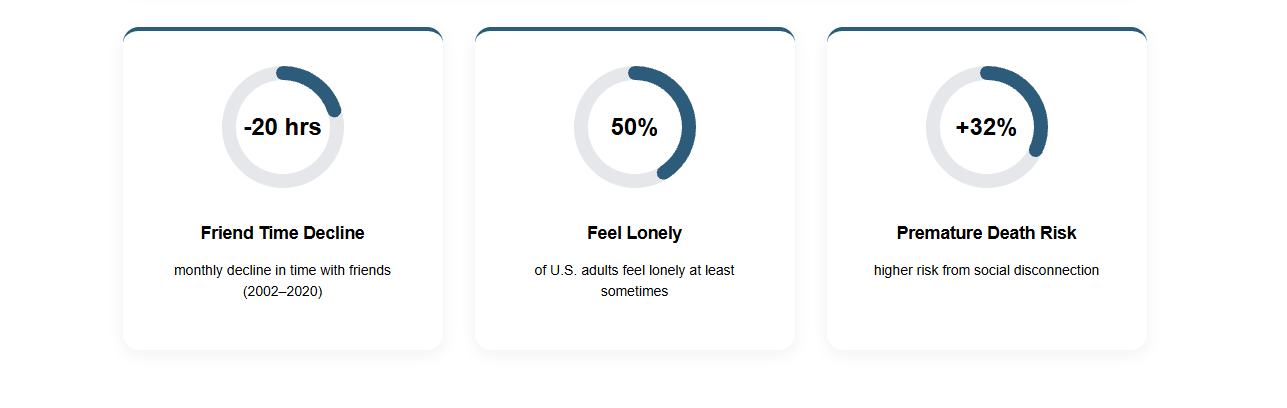
In 2023, the U.S. Surgeon General declared loneliness and social isolation a national public health epidemic. The advisory was prompted by a number of alarming trends: approximately half of U.S. adults reported experiencing loneliness even before the COVID-19 pandemic, and between 2003 and 2020, the average time Americans spent with friends declined by roughly 20 hours per month. This erosion of social connection carries serious health consequences. Research shows that social isolation increases the risk of premature death by 26–32%, heart disease by 29%, stroke by 32%, and dementia by approximately 50%.
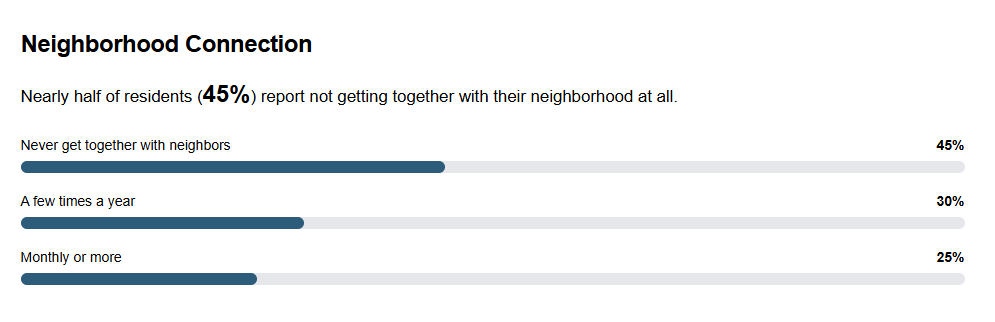
Yet the deeper crisis is not only one of individual well-being. It is the gradual unraveling of the relationships, norms, and shared experiences that hold communities together. In 2025, the Social Connection in America survey found that a majority of U.S. adults reported never participating in clubs, volunteering, or taking action with neighbors in the previous year. When fewer people gather, contribute, and connect across community life, communities lose some of the social fabric that enables trust, belonging, resilience, and collective action.
Communities with stronger connectivity do better overall. They are more innovative and effective with regards to community outcomes, more economically prosperous, and more resilient.
Is connection linked to community and quality of life outcomes in Pleasanton?
YES
Residents' connection and belonging scores predicted self-reported loneliness, stress, general health, and satisfaction with the community. Further, local data show that volunteering and civic engagement appear to be outcomes of connection and belonging, not prerequisites. Residents who feel connected give back more.
What outcomes did connection and belonging predict?

"People are coming to Pleasanton for a better life. It's a common ground to build on…
we all want the same thing."
— Community Resident, Pleasanton Listening Tour, 2025
What is the state of connection in Pleasanton?
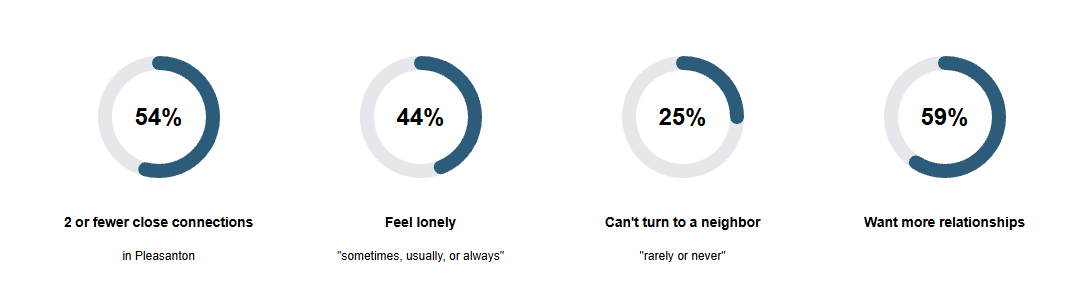
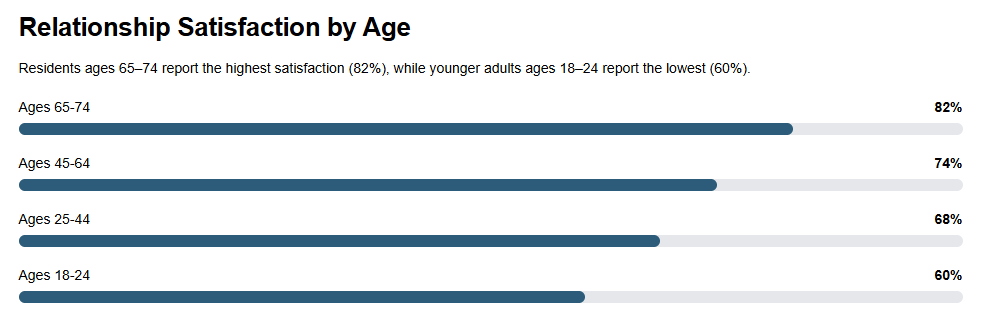
Overall, Pleasanton is a highly connected community. At the same time, experiences of connection and belonging vary across demographic groups, more than half of the population has two or fewer close local ties, and many residents are eager for deeper local relationships. Strengthening connections among neighbors represents one of Pleasanton's greatest opportunities for the future.
Not everyone experiences Pleasanton the same way...
Where do we go from here?
Residents consistently told us that they want more opportunities to build relationships, connect with neighbors, celebrate the community's diversity, and participate in civic life. The findings point to a clear opportunity: investing in the relationships, spaces, and pathways that help people feel connected and involved.
Stay tuned for the full report.
Sign up for our newsletter to be notified when the complete research findings are released.